




Total UK retail sales increased by 1.5% year on year in October, above the three-month average growth of 1.2%, according to the British Retail Consortium (BRC) and KPMG

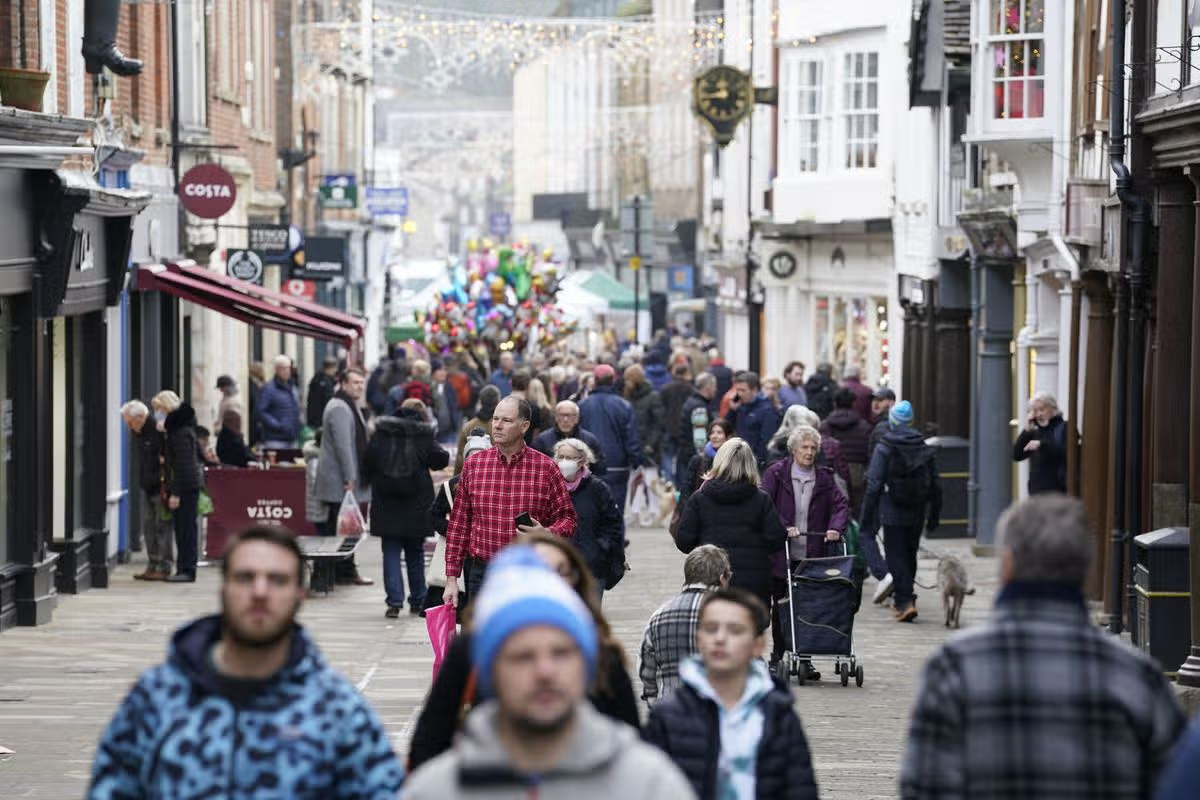
People shopping on the High Street in Winchester, Hampshire(Image: PA)
Retailers saw a sluggish October as consumers held back their spending in anticipation of Black Friday and the festive season, new figures reveal.
Total UK retail sales rose by 1.5% year on year, which, while modest, came in above the three-month average growth of 1.2%, according to the British Retail Consortium (BRC) and KPMG.
Food sales climbed 3.2%, marginally down from last October’s figure of 3.5%, yet still ahead of the 12-month average growth of 3%, buoyed by a modest uptick in cupboard staples following Government guidance urging households to stockpile for emergencies.
Halloween falling on a Saturday also provided a welcome boost to spending on snacks, costumes and decorations.
Non-food sales remained flat, with big-ticket categories such as furniture and white goods faring poorly as shoppers held out for November’s Black Friday bargains.
BRC chief executive Helen Dickinson said: “Retailers are hoping pent-up demand translates into stronger spending through November and December, as they work hard to deliver great choice and value for households this Christmas.
“But shoppers and businesses face mounting costs, including rising interest rates and energy bills, adding to the pressures already pushing up prices.
“Government must move faster to cut back the taxes and regulations making it harder for retailers to keep prices down.”
Linda Ellett, UK head of consumer, retail and leisure markets at KPMG, said: “Clothing and footwear purchases grew in October, along with cosy essentials like duvets, as temperatures lowered and storms finally blew in the start of autumn and winter season for retailers.
“But with consumers facing higher household costs, caution ahead of the Budget, and some waiting for Black Friday deals, overall sales growth was modest.
“Nonetheless, growth will be welcomed by a retail sector that desperately needs to offset cost increases with some strong sales as the promotional and festive season gets into full swing.”
Separate figures from Barclays indicate retail spending expanded by just 0.5% in October, as shoppers made more transactions across certain categories while spending less overall.
Clothing transactions climbed 5.2% while spending dropped 1.8%, suggesting more frequent but lower-value purchases, according to the bank’s data.
The figures revealed consumer card spending grew 2.3% year on year in October, up from 2% in September and representing the strongest growth since July last year.
Essential spending rose 3.1%, up from 2.5%, as fuel expenditure surged 22.7% after diesel surpassed £2 a litre for the first time.
Non-essential spending edged up 1.9%, marginally higher than the previous 1.8%, with entertainment proving a particularly strong performer.
All five of the bank’s consumer confidence indicators declined in October in the lead-up to the Chancellor’s Budget on October 28. Confidence in the UK economy dipped to 23% from the previous month’s 26%, while consumers’ confidence in their capacity to spend on non-essential items fell to 50% from 54%.
Jack Meaning, chief UK economist at Barclays, said: “As the squeeze on consumers’ spending power begins to build, it is reassuring to see resilient numbers in October, albeit alongside signs that consumers are becoming more cautious and that the summer optimism over the economic outlook is starting to fade.
“While the Chancellor’s cost-of-living measures look set to provide welcome support for people at the margins, the survey mirrors our own assessment that, for many, they do not fundamentally change the outlook for the year ahead.”
#retailers #post #weak #October #sales #shoppers #hold #ahead #Black #Friday