



Scientists have identified a receptor on sensory nerves that appears to detect a fatty-acid byproduct found at high levels in psoriasis skin, and blocking it eased itch and skin thickening in mice.
Wheeler et al. identify a metabolic- to-sensory axis in which EKODE, an endogenous dietary linoleic acid derivative, acts as a potent ligand for the G protein-coupled receptor 35 (Gpr35) to drive chronic itch, inflammation, and heat hypersensitivity.
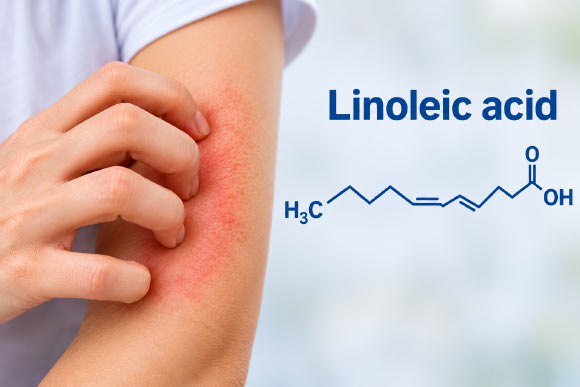
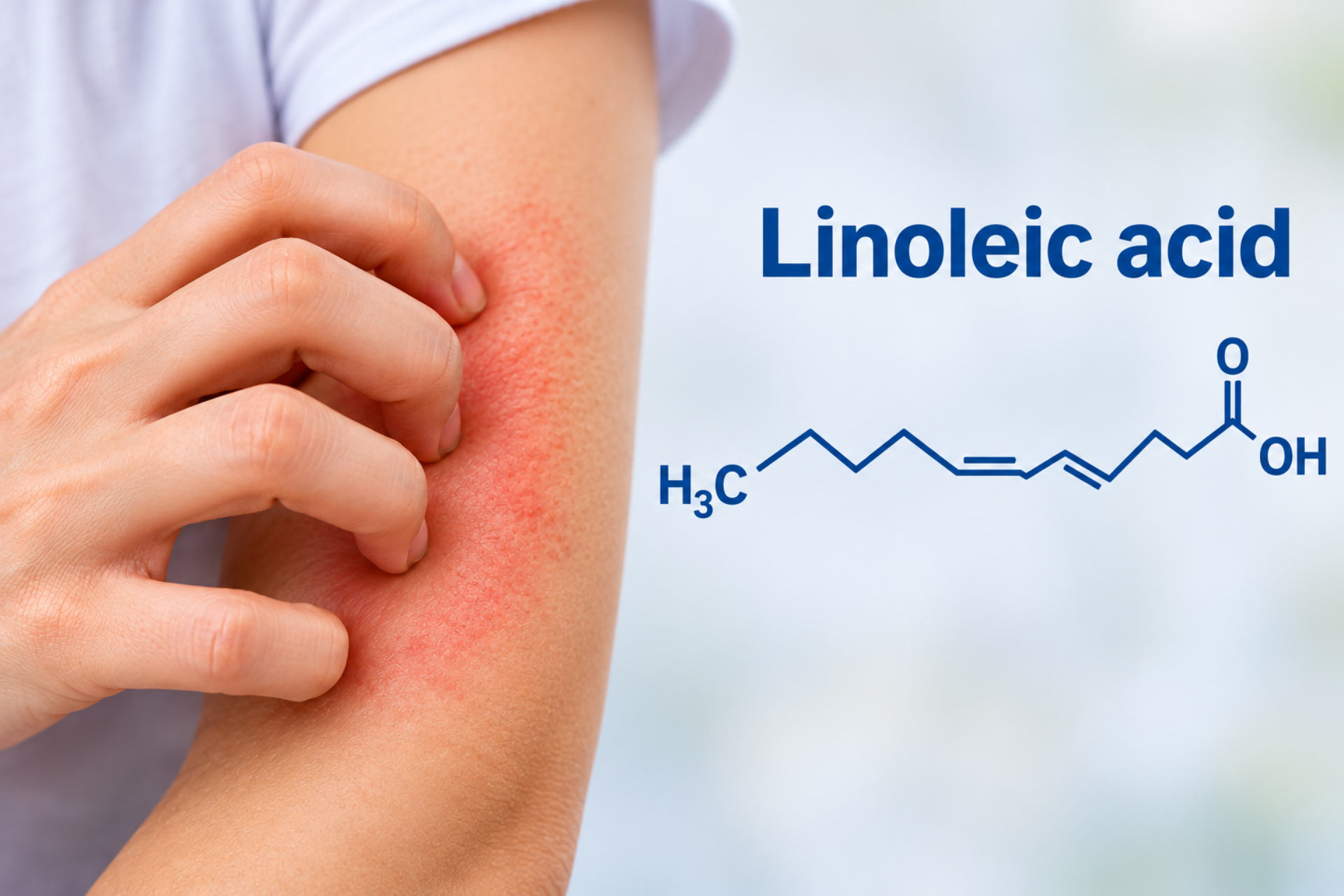
“Linoleic acid is a naturally occurring fatty acid that is found in foods ranging from nuts and seeds to vegetable oils,” said senior author Professor Santosh Mishra, a researcher at North Carolina State University’s College of Veterinary Medicine.
“While humans need to consume linoleic acid in small amounts, overconsumption has been associated with chronic heart disease and diabetes, among other conditions.”
“We also know that certain polyunsaturated fat-derived molecules are associated with itch, and that linoleic acid is the most abundant polyunsaturated fat found in both skin and western diets.”
“We wanted to explore connections between linoleic acid and itch.”
Professor Mishra and colleagues had previously found that a derivative of linoleic acid called EKODE (9-keto-12,13-epoxy octadecenoic acid) is present in higher concentrations in psoriasis lesions than in unaffected skin, and that injecting it makes mice scratch. What had been unclear was how the body detects it.
The new paper points to Gpr35, a receptor found on a subset of the sensory neurons that carry itch signals.
In cultured mouse neurons, EKODE triggered calcium signals, a marker of nerve activation, in roughly 9% of cells.
Those responses dropped when Gpr35 was chemically blocked or genetically deleted.
Mice engineered to lack Gpr35 in a class of pain- and itch-sensing neurons scratched far less after EKODE injections, although they still responded normally to histamine, a classic itch trigger.
The researchers then turned to a standard mouse model of psoriasis, in which the drug imiquimod is applied to the skin.
Mice lacking the receptor developed less skin thickening and scratched less than normal mice.
In normal mice with psoriasis-like or eczema-like skin, a single injection of a Gpr35-blocking compound reduced scratching.
The scientists also found that a neuropeptide called Nppb, previously tied to itch, appeared to act downstream of the receptor.
Mice lacking it scratched less and had thinner skin in the psoriasis model.
The mice lacking Gpr35 also took longer to pull away from some hot surfaces, though not from cold or touch tests.
According to the authors, GPR35 is present in human sensory neurons. In samples from two donors, every Nppb-expressing neuron they examined also expressed GPR35.
“The work shows the importance of GPR35 because this receptor is connected to two totally different diseases — one autoimmune and one allergic,” Professor Mishra said.
“But in both diseases the itch pathway is using the same receptor, which means that GPR35 is a promising therapeutic target for both diseases.”
The findings appear in the journal Communications Biology.
_____
J.J. Wheeler et al. 2026. Metabolic sensor Gpr35 links dietary lipids to itch mediating neural circuits. Commun Biol 9, 1393; doi: 10.1038/s42003-026-11087-x
could-common-cooking-oil-fat-be-fueling-psoriasis-itch