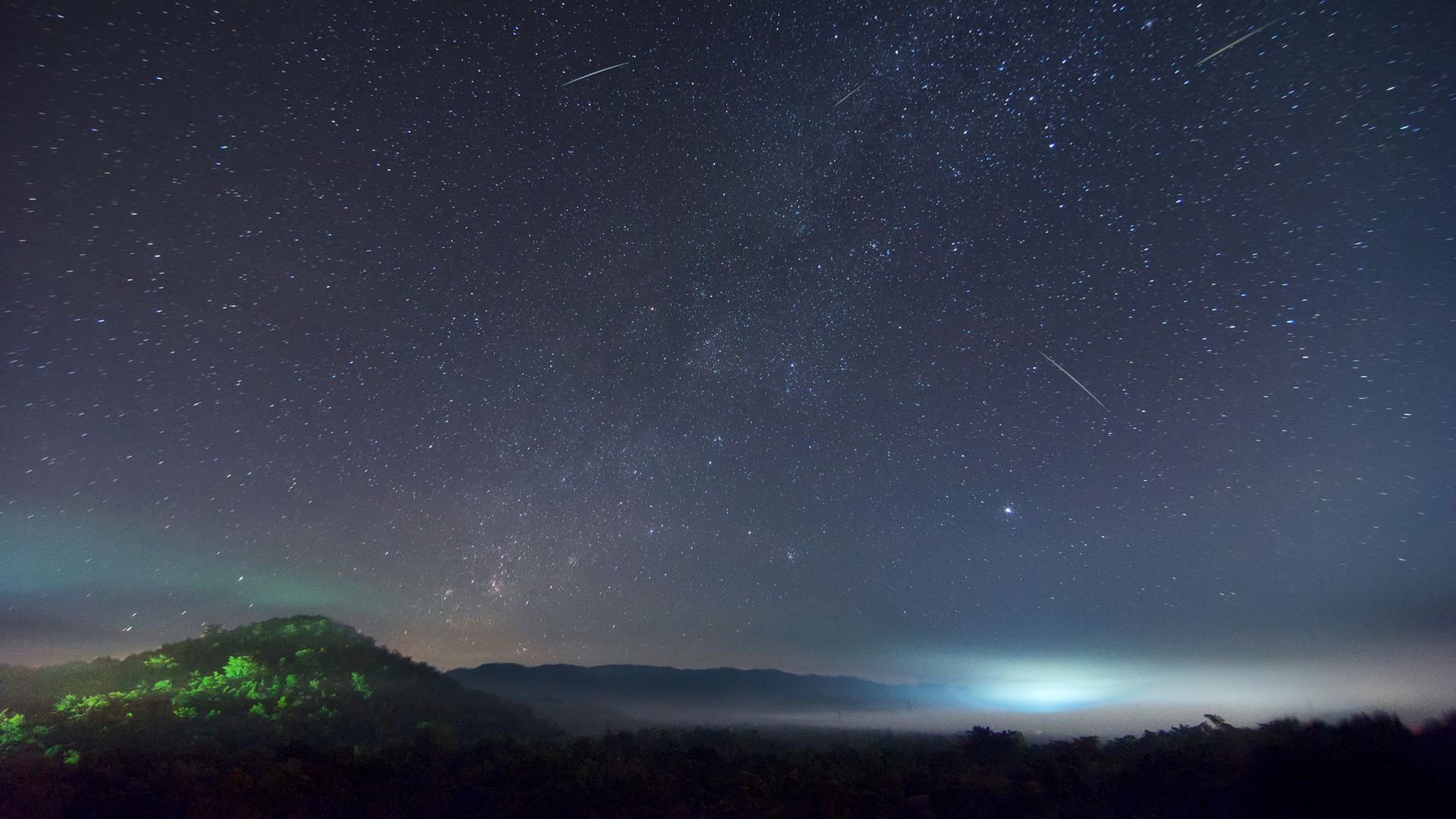
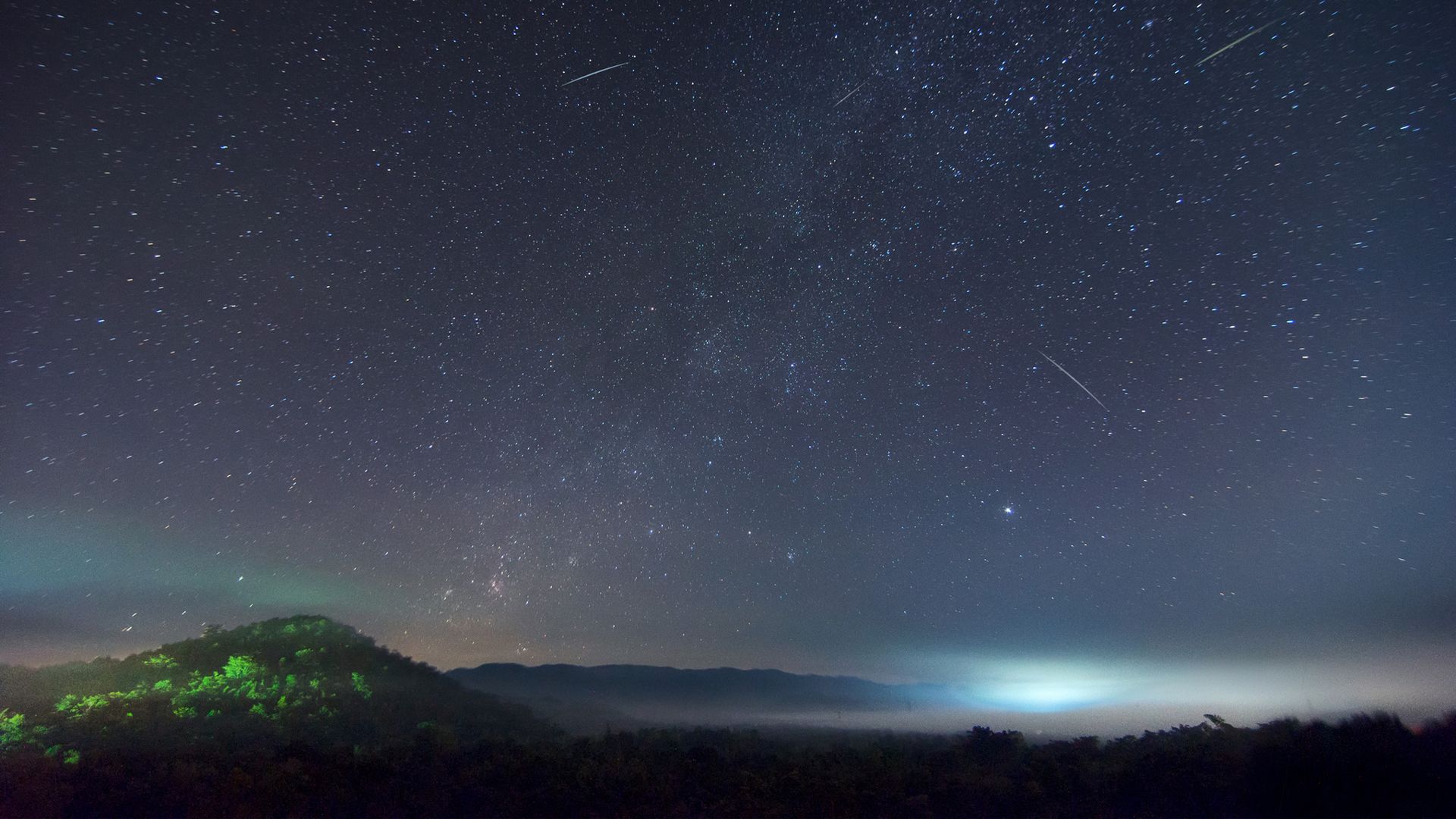
One of November’s best meteor showers peaks tonight (Nov. 16-17) and is expected to bring up to 15 “shooting stars” per hour to a near-moonless night sky.
Although the annual Leonid meteor shower, which is famous for occasionally producing spectacular meteor storms, is active from Nov. 6 to Nov. 30, the peak on Monday into Tuesday is the best time to look, according to the American Meteor Society.
Although the Leonids typically produce around 15 meteors per hour under ideal conditions, they’re among the year’s fastest shooting stars, reaching 43 miles per second (70 kilometers per second), and often produce bright meteors that leave glowing trails.
Latest Videos FromLive Science
The best time to see them is between midnight and dawn Tuesday (Nov. 17), when the constellation Leo, from which the meteors appear to radiate, climbs higher in the eastern sky. However, shooting stars can appear anywhere in the sky.
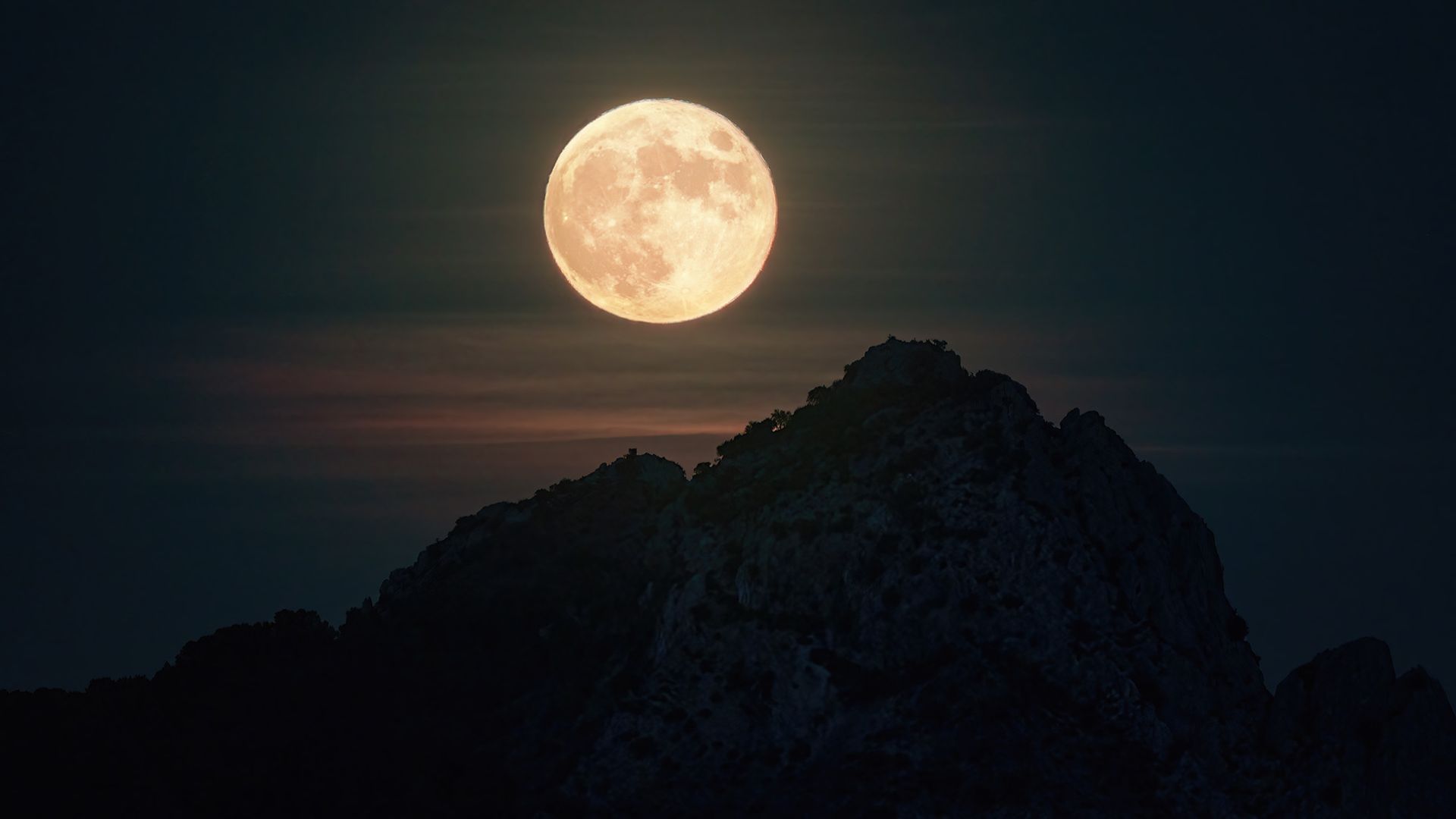
A 45%-lit waxing crescent moon will set just before midnight, leaving dark skies for meteor watching. For the best views, find a spot away from artificial lights, lie back with a wide view of the sky, and allow about 20 minutes for your eyes to become adapted to the dark. Don’t use binoculars or a telescope during a meteor shower; they will only restrict your view. However, you can try your hand at photographing the shower with your smartphone or a good astrophotography camera.
The Leonids are produced by tiny particles of dust and debris left behind in the inner solar system by Comet 55P/Tempel-Tuttle, which takes about 33 years to orbit the sun and is about 2.2 miles (3.6 km) in diameter. Tempel-Tuttle last visited the inner solar system in 1998 and is due to return again in 2031.
Although no rapid-fire “meteor storms” are expected this year, the Leonids are famous for occasionally producing outbursts of 1,000 shooting stars per hour. Such storms occurred in 1833, 1866, 1966, 1999, 2001 and 2002, according to the American Meteor Society. The next storm is expected to hit in 2099.
Get the world’s most fascinating discoveries delivered straight to your inbox.
After the Leonids, the next major meteor shower will be the Geminids, which peak overnight on Dec. 13-14. The Geminid meteor shower, which is caused by an asteroid rather than a comet, can produce up to 120 meteors per hour. This year, the Geminids will peak in dark skies, thanks to a slim crescent moon setting shortly after dark on Dec. 13.